
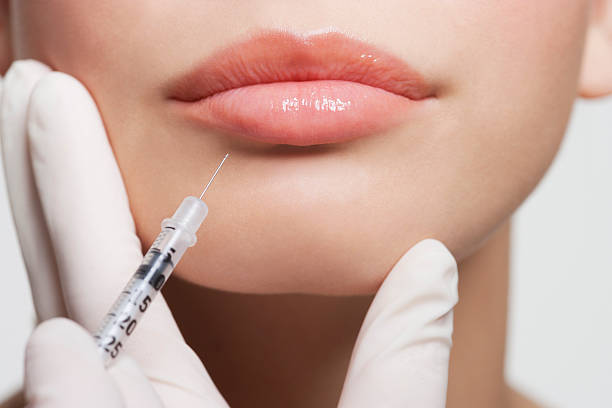
Botox injection has been in use from early 2000s for tightening skin and reducing the sign of aging. Those who undergo this treatment achieve a youthful appearance and build their self-confidence. The history of Botox goes back to 1920, when Dr. Kerner discovered botulinum toxin. Research continued and in 1950s it was discovered that a small dose of the substance could reduce muscle spasm. In 1970s Dr. Alan Scott, an ophthalmologist while searching for a way to fix strabismus, discovered that benefits were beyond eyes. His research proved that Botox could be used for conditions like excessive sweating, facial tics and bladder spasm. Research continued and in 1989 FDA granted approval to Botox injection for treatment of problems with eye muscle. In the 2002 Botox got approval from FDA for cosmetic procedure. It started as a treatment for removing forehead wrinkles and since then it has proven to be effective in many aesthetic and medical cases.
Mechanism of action and cosmetic used of Botox injection
Botox injection contains Botulinum Toxin which is a neurotoxin. The substance targets the nervous system and disrupts the signalling process of the nerve which stimulates contraction of muscles. In layman’s terms the substance causes a temporary paralysis of the muscle. To make a muscle contract, a chemical called acetylcholine is released by the nerve at the junction on muscle cell and nerve endings. The chemical attaches itself to the receptors of the muscular cell and causes it to contract or shorten. Botox injection prevents release of this chemical and thus inhibits contraction of the muscle. Thus, it helps the muscle to become stiff.
Owing to its property, Botox sees use for many cosmetic processes most commonly, reducing facial wrinkles. As per the American Board of Cosmetic Surgery, this is the most popular cosmetic procedure. The most popular request of the injection come for:
- Crow’s feet or wrinkles around the eyes
- Creases on the forehead
- Frown lines or wrinkles between eyebrows
- Lines at corners of mouth
- Sagging chin
Healthcare professionals use Botox in the treatment of a variety of medical conditions that affect neuro-muscular system. Common medical uses of Botox are seen in cases of:
- Strabismum or crossed eye
- Hyperhidrosis or severe underarm sweating
- Eyelid spasm
- Upper limb spasticity
- Cervical dystonia, a neurological movement disorder
After care tips for those using Botox injection
Though Botox is a safe treatment and has long lasting effects, if you want the best results for yourself then you must follow some aftercare tips. Like any procedure, there are some precautions that you must take if you are using the Botox injection.
- You must not rub your face for 24 hours after the treatment. You should avoid applying pressure to the affected areas, else the substance can move to an intended area of the face.
- For proper aftercare and best results, you must avoid any form of strenuous exercise for a few days.
- Try to avoid sleeping on the side of the areas treated for that night. Surely, sleeping in a position constantly can be tricky, but if you have undergone the treatment you must try to sleep on your back.
- Though, discomfort is rare, some people experience slight pain after taking the injection and it disappears in a few days. If you feel pain, reach out to your doctor to understand which pain killer you can take.
- After the first day, you should start exercising your facial muscles gently. Practice your natural expressions, just smile, grin, or frown.
Following the above five essential aftercare tips will ensure that you achieve best results and they long last.
 My Medical Health Blog