
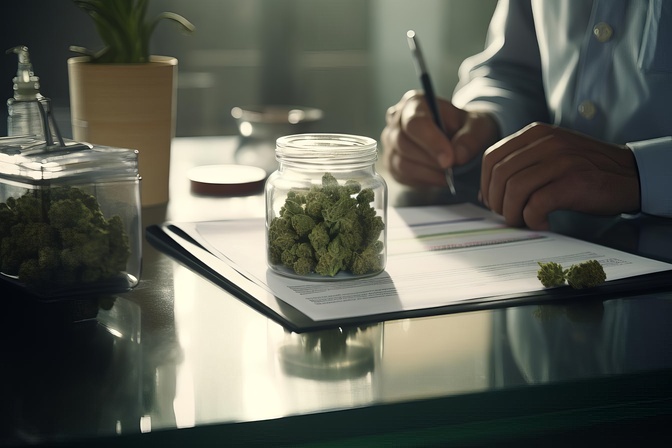
It is nearly impossible for doctors and their patients to have an intelligent discussion about medical cannabis without bringing up the impairment question. Whether you prefer the term ‘medical cannabis’ or ‘medical marijuana’, the fact remains that both the marijuana plant and products derived from it contain THC. And THC, in large enough doses, is intoxicating.
There may be cases for which a doctor and patient agree that cannabis impairment will be an unavoidable byproduct of using marijuana as a medicine. In such cases, patients need to be cognizant of their impairment and how it impacts their daily lives. But in most cases, I suspect doctors and patients try to avoid impairment as much as possible.
Impairment could make it too difficult for some patients to maintain full-time employment. It certainly inhibits one’s ability to drive, use machinery, and so on. So it would make sense to keep things in check.
Patients Are Assessed Individually
The need to avoid impairment is one of the reasons so many states require official recommendations from doctors before consumers can use cannabis medicinally. Utah is one such state. According to the operators of Zion Medicinal, a southern Utah dispensary that serves Cedar City and St. George, a person must get a recommendation from a medical provider in order to qualify for a medical cannabis card.
A patient also needs to visit the medical provider face-to-face, at least to get the initial card. Video visits can be arranged for most card renewals. The face-to-face visit is required initially so that the medical provider can conduct an individual assessment of the patient.
Medical providers need to consider a number of things before offering a medical cannabis recommendation:
- Is the patient’s condition on the state’s list of qualifying conditions?
- Are the patient’s symptoms consistent with those normally treated by cannabis?
- Is cannabis and appropriate treatment based on the patient’s current health and circumstances?
- Are there better treatments that should be tried before the patient moves to medical cannabis?
One of the qualifying conditions in Utah is acute pain expected to last more than a couple of weeks. The example everyone brings up for illustrative purposes is post-surgical pain. If a surgeon would otherwise prescribe opioids for pain management, they can recommend medical cannabis instead.
Dosage and Delivery Method
The folks at Zion Medicinal say that dosage and delivery methods can contribute to impairment. Although the state of Utah does not allow marijuana smoking, there is no denying the fact that smoking is the fastest and most effective way to get THC into the system. Smoking often leads to impairment.
Medical cannabis patients in Utah can turn to cannabis vapes or dry heating in place of smoking. Both delivery methods offer similar results. As such, a patient hoping to avoid impairment might choose to either avoid vaping or use a very low-dose product.
A doctor might also recommend medical cannabis edibles. An edible can take a couple of hours to kick in, as compared to the more immediate results of vaping. Pain relief also tends to be more consistent and long-lasting with an edible. The nice thing about edibles is that they offer more control over impairment.
Use With Appropriate Caution
Discussing the impairment question within the broader scope of medical cannabis consumption ultimately leads to a simple conclusion: medical cannabis should be used with appropriate caution. It should be treated like any other prescription medication with impairing capabilities. To do otherwise would be to not take cannabis’s medical benefits seriously. Not only that, but impairment could also have negative and long lasting consequences.
 My Medical Health Blog