
Falls are a common occurrence in many settings. Whether it’s at home, in a health care facility, or at other public or private places where emergency medical service (EMS) crews respond to assist, helping the fallen get back up as quickly as possible is vital. Using a personal lift in these circumstances – especially when it involves frail, obese, and elderly individuals – is the best way to not only ensure the safety and comfort of the fallen individual, but to preserve their dignity and self-respect.
A cause for growing concern
Helping someone up, that has had a fall, is indeed a noble thing to do. Friends and family members, home caregivers, health care providers, and paramedics constantly pick-up individuals who have had a fall. But here’s the challenge:
- What happens if there’s no one around (as in the case of someone living independently or alone) to pick up a fallen person?
- What if there is someone around – a nursing professional, a family member, but they are incapable (due to physical constraints) to quickly aid the fallen individual off the floor?
Thankfully, estimates indicate that almost 80%1 of falls cause no injury. Still, falls are a growing public health concern. The Centers for Disease Control and Prevention (CDC), based on studies conducted by the Journal of the American Geriatrics Society2, predicts that incidents of falling, especially among older adults and other vulnerable groups, will continue to rise – from about 46 million individuals in 2014 to nearly 50 million by 2030.
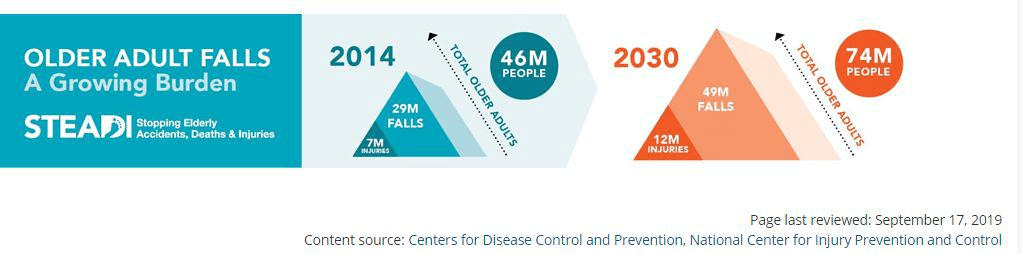
Even though most falls don’t result in injuries, clearly, with numbers of that magnitude, it’s unwise to take falls lightly. There’s justifiable cause for concern about falls, therefore, among both public and private health care professionals. Having some form of fall recovery assistance at hand can, potentially, mitigate those concerns.
Safety first – Helping the fallen get back up
Whether it’s someone living on their own that’s fallen, or whether it’s in an assisted-living or health care setting, the bigger question is: How do you assist the fallen, without risking injury to either the fallen, those assisting them, or both?
For isolated individuals in distress, after a fall, crawling to the nearest chair or recliner might not be the most effective thing to do. And nurses and paramedics risk potential self-injury when attempting to pick up individuals that have fallen. Having a specially designed human floor lift (HFL), built with the express purpose of helping the fallen, can often be a life saver.
The IndeeLift HFL is ideal for residential and commercial use, for professional health care providers, and emergency medical services personnel. At the heart of this device is their self or assist-operated features, which are ideal for individuals living independently or for use by health care or emergency assist staff.
IndeeLift’s human floor lift(HFL) brings greater peace of mind to friends and family members of independent-living individuals. They know that their loved-ones have a self-operable device to quickly assist in picking them up if a fall does occur. And in commercial settings, or where EMS staff responds, the HFL is a safe device to use, especially when also protecting the health and safety of the care provider or responder. The device prevents injury to assisters and the assisted, and it eases patient movement onto stretchers or beds safely and securely.
 My Medical Health Blog